

8/28/2026
Is your Company in our Directory?

How to Generate More Event Attendees—and Turn Them Into Pipeline

8/26/2026
That is why choosing an event marketing agency should not be based on registration volume alone. The better question is: Can the agency turn your target accounts into attendees, conversations, and pipeline?
For B2B companies, that requires a sales-driven approach to event marketing.
How Do You Generate More Event Attendees?
The strongest event programs do not rely on email blasts alone. They combine targeted outreach, qualification, confirmation, and fast follow-up.
Here are the five layers that matter most:
- Build a named account list. Target specific companies, decision-makers, and buying committees instead of broad audience segments.
- Use multiple channels. Combine email with phone and LinkedIn outreach to increase the chances of getting the event onto a prospect's calendar.
- Qualify during registration. A few questions about timing, needs, or buying intent can improve the quality of attendees.
- Confirm attendance. A live confirmation touch within 48 hours of the event can prevent no-shows.
- Follow up immediately. Start working event leads during the same week instead of waiting until interest disappears.
For companies that lack the resources to execute this consistently, outsourcing event marketing services can provide the targeting, outreach, confirmation, and follow-up infrastructure.
The goal isn't simply to fill seats. It's to fill them with the accounts your sales team actually wants to engage.
A Real Event Marketing Result
One Callbox campaign generated:
- 1,325 RSVPs
- 180 appointments
- 293 MQLs
See the full Callbox event marketing case study
The takeaway is simple: event success should extend beyond attendance.
What Does Event Marketing Data Tell Us?
Events remain an important B2B marketing channel. HubSpot's event marketing research reports that 80.4% of businesses consider in-person events their most impactful marketing channel.
But there is an important distinction:
The channel that generates registrations isn't necessarily the channel that generates sales conversations.
Email can efficiently create awareness. Human outreach can help turn that awareness into attendance and qualified engagement.
A useful question to ask any prospective agency is:
What is your average registration-to-attendance rate across your last four programs?
Ask for the average—not the best-performing campaign.
How Do You Calculate Event Marketing ROI?
Cost per registration is not enough. You need to understand the economics of the entire event.
1. Calculate true cost per attendee
Use:
Total program cost ÷ actual attendees = cost per attendee
Include agency fees, venue or booth costs, travel, content production, and internal team hours.
A $150,000 event producing 500 registrations with a 55% show rate creates only 275 attendees. That puts the real cost at approximately $545 per attendee.
2. Calculate the value of an opportunity
Multiply your average contract value by your event-specific win rate.
For example:
$120,000 ACV × 25% win rate = $30,000 expected value per opportunity
That number gives you a much clearer picture of what an event-generated opportunity is worth.
This is why lead generation events should ultimately be measured by qualified conversations and opportunities—not registrations alone.
3. Establish your break-even point
Divide total program cost by expected opportunity value.
$150,000 ÷ $30,000 = 5 opportunities
That means the event needs to generate at least five qualified opportunities to break even under this model.
How Should You Evaluate an Event Marketing Agency?
Before signing a long-term contract, use this seven-step evaluation process:
- Define the business outcome. Set a target for qualified opportunities, not just registrations.
- Classify the work. Determine whether you need demand generation, creative production, logistics, or a combination.
- Check audience access. Ask how the agency reaches your ICP when your own database is insufficient.
- Audit attribution. Confirm how registrations, attendance, meetings, and opportunities enter your CRM.
- Meet the delivery team. Talk to the people who will actually manage your campaign.
- Ask about failures. Find out what happened when a previous event missed its attendance target.
- Start with a pilot. Test one event or region before committing to a larger program.
For multinational campaigns, also determine whether the agency can coordinate marketing events across Europe and other regions while maintaining consistent targeting and follow-up.
Which Event Marketing Agency Is Right for You?
Not every event agency solves the same problem.
Need large-scale creative experiences? Look at firms such as George P. Johnson, Jack Morton, or Momentum Worldwide.
Need trade show exhibits and logistics? Sparks and Freeman are better aligned with that requirement.
Need more qualified attendees and sales conversations? You need a demand-generation partner capable of outbound targeting, qualification, appointment setting, and follow-up.
For B2B organizations, B2B appointment setting can extend the value of an event by turning attendee engagement into qualified sales conversations.
Callbox also provides webinar and virtual event marketing programs for companies that want the same demand-generation approach across virtual and in-person events.
Other articles and publications:
AI is changing how B2B companies find and engage potential customers. But having AI tools alone doesn't guarantee better leads.

A successful GTM strategy in LATAM requires more than translating your website and sales materials into Spanish or Portuguese.
8/31/2026

Healthcare B2B companies need partners that understand how to identify the right accounts, reach multiple stakeholders, qualify opportunities, and coordinate outreach across channels.
9/9/2026

Logistics is the backbone of modern commerce. Across all of these industries, logistics providers compete for the same thing: qualified business opportunities.
9/18/2026

Four verified Clutch reviews in August 2026 rated Callbox 4.0–5.0/5, citing more sales meetings, 20+ bookings, webinar registrations, and increased inbound leads.
8/25/2026

Have you ever wondered how to elevate your lead generation strategies and tailor them to specific sectors? Let's dive in and see some answers to your question.
9/27/2024
Articles and publications of other companies:
To learn more about Sales and Marketing reach us on 855-203-8196 or email at info@vsynergize. com
6/15/2020
VSynergize, a B2B lead generation company in California offers lead generation, demand generation, call center services and advanced IT/back office solutions
5/30/2020
VSynergize, a B2B lead generation company in California offers lead generation, demand generation, call center services and advanced IT/back office solutions.
5/25/2020
For a free consultation for your B2B lead generation needs, Call us at 1-888.257.9162 or Email us at info@vsynergize. com
6/15/2020
In order to sell effectively, you’ll need to constantly generate high-quality leads that you can convert to customers: leads that your salespeople can take, contact, meet and make sales with.
5/13/2020
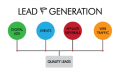
VSynergize, a B2B lead generation company in California offers lead generation, demand generation, call center services and advanced IT/back office solutions.
5/25/2020
Business details
- +1 (888) 810-7464
- 4924 Balboa Blvd., #353 Encino, CA USA 91316
- www.callboxinc.com/
Callbox helps businesses close more leads with AI + human expertise. A leading provider of lead generation services.
California
company, product and service directory
company, product and service directory
Business Network 2008-2026
All rights reserved
All rights reserved