

9/2/2026
Is your Company in our Directory?

Expanding Into Latin America? Your GTM Strategy Needs More Than Translation

8/31/2026
Latin America represents a major growth opportunity for B2B companies—but treating the region as a single market can quickly turn expansion into an expensive lesson.
Here are five principles companies should consider before entering the region.
1. Don't Treat LATAM as One Market
Mexico isn't Brazil. Chile isn't Argentina.
Start by evaluating each market based on market size, demand, regulatory complexity, currency stability, competition, and accessibility.
A tiered approach can help:
- Tier 1: Brazil and Mexico—large opportunities with greater complexity
- Tier 2: Chile, Colombia, and Peru—accessible markets for testing your approach
- Tier 3: Argentina, Uruguay, and specialized markets—opportunities requiring more tailored strategies
For a deeper look at country-level planning, explore these GTM strategies in LATAM regions.
2. Select the Right Route to Market
You can enter through direct sales, local partners, or a hybrid approach.
Direct sales provide more control but require greater investment. Local partners provide market access but can reduce control over messaging and customer relationships.
Whichever route you choose, evaluate potential partners based on their actual customer base, sales activity, technical capabilities, and industry experience—not just their promises.
3. Localize Your Value Proposition
Translation isn't localization.
LATAM buyers need to understand how your solution addresses their specific business challenges.
Focus your messaging on outcomes such as:
- Lower operational costs
- Reduced business risk
- Regulatory compliance
- Greater efficiency
- Flexible commercial terms
Your product may remain the same, but the reason buyers choose it can differ by market.
4. Build a Multichannel Sales Strategy
B2B buyers rarely move from awareness to purchase through one channel.
Combine targeted phone outreach, personalized email, LinkedIn engagement, ABM, events, content, and local partnerships.
You can also strengthen pipeline development through appointment setting strategies in Latin America, particularly when reaching senior decision-makers is a challenge.
Also map the entire buying committee. Finance, IT, procurement, operations, legal, and executive leadership may all influence an enterprise purchase.
5. Think Beyond the First Customer
Landing your first customer is only the beginning.
A sustainable LATAM revenue engine should move from:
Awareness → Leads → Meetings → Sales → Expansion → Advocacy → New Opportunities
Retention, upselling, referrals, and customer advocacy can become important sources of future growth.
A Colombia-based SaaS lead generation case study provides an example of how coordinated outreach can support growth across multiple Latin American markets.
The Bottom Line
The biggest mistake companies make when expanding into Latin America is assuming that one regional strategy will work everywhere.
A stronger approach is to standardize your core strategy while localizing execution.
Prioritize the right markets, choose appropriate sales channels, adapt your value proposition, and build a localized pipeline engine. That's how companies can turn LATAM expansion from a risky experiment into a scalable growth strategy.
If you're evaluating the opportunity, this overview of why businesses expand into Latin America is a useful next read.
Other articles and publications:
If you are a CRO or VP of Sales struggling to build US pipeline coverage without blowing your budget, pay attention: Colombia is becoming Latin America’s most competitive B2B sales hub.

Building an in-house SDR team takes time. You need to hire people, train them, invest in sales tools, build prospect lists, and create an outreach process.
8/27/2026

RPA vendors need more than generic appointment setting. The right partner should understand technical products, enterprise buying committees, and the longer sales cycles common in automation.
9/29/2026

Callbox has been recognized as one of the leading B2B demand generation companies, reinforcing its position as a trusted partner for organizations seeking qualified pipeline growth.
7/15/2026

True demand generation agencies go beyond traditional lead generation. They focus on engaging prospects, building long-term relationships, and delivering measurable ROI.
1/2/2026

In this guide, we’ll walk you through the key steps to take your tech sales beyond Europe.
10/28/2024
Articles and publications of other companies:

In order to sell effectively, you’ll need to constantly generate high-quality leads that you can convert to customers: leads that your salespeople can take, contact, meet and make sales with.
5/13/2020
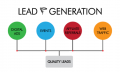
VSynergize, a B2B lead generation company in California offers lead generation, demand generation, call center services and advanced IT/back office solutions.
5/25/2020
To learn more about Sales and Marketing reach us on 855-203-8196 or email at info@vsynergize. com
6/15/2020
VSynergize, a B2B lead generation company in California offers lead generation, demand generation, call center services and advanced IT/back office solutions
5/30/2020
Lead qualification, thus, does not mean passing on all possible prospects to the sales development teams but sifting through the lead bank ensures higher lead quality.
6/22/2020
In order to sell effectively, you’ll need to constantly generate high-quality leads that you can convert to customers: leads that your salespeople can take, contact, meet and make sales with.
5/25/2020
Business details
- +1 (888) 810-7464
- 4924 Balboa Blvd., #353 Encino, CA USA 91316
- www.callboxinc.com/
Callbox helps businesses close more leads with AI + human expertise. A leading provider of lead generation services.
California
company, product and service directory
company, product and service directory
Business Network 2008-2026
All rights reserved
All rights reserved