

9/17/2026
Is your Company in our Directory?

How B2B Logistics Companies Can Generate More Sales Leads

9/18/2026
For B2B logistics companies, generating those opportunities isn't always straightforward.
Supply chain managers and procurement leaders are busy. Sales cycles can be lengthy. Prospects often have complex requirements, and many logistics providers offer similar services.
That makes targeted logistics lead generation essential.
Instead of trying to reach every potential customer, logistics companies can build a more predictable pipeline by identifying the right accounts, understanding their needs, and using multiple channels to engage decision-makers.
Why Lead Generation Is Critical for Logistics Sales
Logistics sales and lead generation work together.
Sales teams focus on converting prospects into customers, while lead generation creates the pipeline those sales teams depend on.
The challenge is that a logistics prospect may not be ready to buy immediately. They may be comparing providers, reviewing contracts, evaluating shipping requirements, or looking for ways to reduce transportation and warehousing costs.
Effective lead generation keeps your company visible throughout that buying process.
The objective isn't simply to generate a larger list of prospects. It's to identify businesses that have a genuine need for your services and connect with the people responsible for logistics, procurement, supply chain, or operations.
For companies looking to turn those prospects into conversations, appointment setting and lead generation can complement broader logistics marketing efforts.
The Biggest Challenges in Logistics Sales
Before developing a lead generation strategy, it helps to understand why logistics sales can be difficult.
Common challenges include:
- Reaching decision-makers: Supply chain and procurement executives are often difficult to reach through generic channels.
- Long sales cycles: Logistics agreements can involve negotiations, service requirements, pricing discussions, and multiple stakeholders.
- Strong competition: Many providers offer overlapping transportation, warehousing, and supply chain services.
- Poor lead quality: Unqualified prospects can consume significant sales resources.
- Limited resources: Smaller sales and marketing teams may not have the capacity for consistent prospecting.
- Seasonal demand: Logistics demand can fluctuate depending on industry and season.
- Weak segmentation: Broad campaigns can miss the specific needs of different customer groups.
- Complex requirements: Prospects may require customized logistics solutions rather than standardized packages.
- Limited digital adoption: Some providers continue to rely heavily on traditional sales methods.
These challenges make a focused B2B strategy more practical than simply increasing outreach volume.
Start by Defining Your Ideal Logistics Customer
A strong logistics lead generation campaign starts with the customer profile.
Rather than treating the entire market as one audience, identify the types of companies that are most closely aligned with your services.
Consider:
Industry
Potential customer segments may include:
- Manufacturers
- E-commerce businesses
- Retailers
- Wholesalers
- Distributors
- Technology companies
- Healthcare organizations
Shipping requirements
Determine whether your ideal customers need:
- Domestic transportation
- International shipping
- High-volume freight
- Cold-chain logistics
- Specialized handling
- Warehousing
- Last-mile delivery
Business pain points
Your prospects may be looking to:
- Reduce logistics costs
- Improve delivery times
- Increase shipment visibility
- Resolve capacity problems
- Improve compliance
- Scale distribution
- Simplify supply chain management
This information gives your sales team a much clearer basis for outreach.
Understand the Different Types of Logistics Buyers
Not every logistics company sells the same service, and not every prospect has the same requirements.
Understanding the differences between logistics segments can help shape your messaging.
Third-Party Logistics Providers
3PL companies manage logistics activities on behalf of other businesses, including transportation, freight handling, warehousing, and related services.
If you're selling 3PL services, your messaging should emphasize measurable operational value such as reliability, scalability, delivery efficiency, and cost control.
For companies specifically looking to expand their customer base, learning how to find 3PL customers can provide a more targeted starting point.
Fourth-Party Logistics Providers
4PL providers take a broader role by coordinating and managing multiple elements of a customer's supply chain.
Their value proposition can focus on supply chain visibility, coordination, optimization, and strategic management.
Companies pursuing this market can also explore specialized 4PL lead generation strategies.
Warehousing Providers
Warehousing companies can target businesses with significant inventory and storage requirements.
Messaging should focus on factors such as security, capacity, scalability, inventory management, and operational efficiency.
In-House Logistics Operations
Some large organizations manage their logistics internally.
For these accounts, the opportunity may involve consulting, technology, optimization, or specialized services designed to improve existing operations.
Courier and Last-Mile Services
Last-mile providers serve businesses that need goods transported from distribution points to their final destinations.
Their sales messaging can focus on delivery speed, reliability, visibility, and customer experience.
Reverse Logistics
Reverse logistics covers product returns, repairs, recycling, and related activities.
Companies operating in this space can position their services around efficiency, sustainability, cost management, and customer satisfaction.
For logistics technology providers, specialized logistics technology solutions can also become part of the value proposition.
Use a Multi-Channel Lead Generation Strategy
Once your target audience is defined, the next challenge is reaching them.
A single channel rarely provides enough coverage on its own.
Instead, logistics companies can combine digital and outbound tactics.
1. Explore Logistics Marketplaces
Electronic logistics marketplaces can connect providers with companies actively looking for transportation and supply chain services.
Different marketplace models can support different objectives:
Open marketplaces can help providers compete for available opportunities based on pricing, capacity, and reliability.
Private marketplaces can support more controlled relationships between shippers and logistics providers.
Collaborative marketplaces can allow companies to coordinate distribution networks and resources.
The important consideration is choosing the marketplace model that matches your service and target customer.
2. Build a Targeted B2B Outreach Program
Cold calling, email, and LinkedIn can work together when they're built around a clearly defined audience.
Instead of sending the same message to every prospect, tailor the outreach according to the company's industry, shipping requirements, and business challenges.
For example, a manufacturer struggling with international freight requirements should receive a different message from an e-commerce company looking for faster last-mile delivery.
This type of account-based approach can make outreach more relevant and help sales teams prioritize higher-value opportunities.
Companies can also review lead generation companies for logistics when additional prospecting capacity is needed.
Segment the Logistics Market
Market segmentation allows logistics companies to move beyond broad targeting.
You can segment prospects according to:
- Industry
- Company size
- Geography
- Shipping volume
- Product type
- Distribution model
- Technology adoption
- Logistics challenges
For example, a logistics provider targeting manufacturers could create separate campaigns for automotive companies, medical device manufacturers, and industrial equipment businesses.
Each group may have different operational priorities, which means each campaign can use a more relevant value proposition.
Segmentation can also help marketing and sales teams distinguish between marketing-qualified and sales-qualified opportunities.
Don't Ignore Digital Marketing
Outbound prospecting is only one part of a modern logistics lead generation strategy.
Digital marketing can help prospects discover your company while they're researching logistics challenges and potential providers.
Content Marketing
Create useful content around problems your target customers are actively researching.
Topics might include:
- Reducing transportation costs
- Improving supply chain visibility
- Choosing a 3PL provider
- Managing international freight
- Improving warehouse efficiency
- Increasing delivery reliability
SEO
Search optimization can help your website appear when prospects search for logistics solutions.
Rather than focusing only on broad keywords, build content around specific commercial and informational searches related to your services and customer pain points.
LinkedIn can help logistics companies reach supply chain, procurement, operations, and executive audiences while distributing industry-specific insights.
The goal should be to build credibility and relevance rather than simply promote services.
Use Inbound Marketing to Nurture Prospects
Not every visitor or lead will be ready to speak with sales.
Inbound marketing gives logistics companies a way to continue engaging prospects until they reach a buying stage.
Email campaigns can deliver content based on a prospect's interests and business needs.
CRM platforms can help sales teams organize contacts, track interactions, segment accounts, and identify opportunities for follow-up.
Understanding the benefits of inbound marketing can help logistics businesses build a more connected approach between marketing and sales.
Combine Inbound With Outbound Prospecting
Inbound and outbound marketing don't have to operate separately.
Outbound campaigns can proactively identify and engage target accounts, while inbound content can support the research and nurturing process.
Useful outbound tactics include:
- Cold calling
- Personalized email
- LinkedIn outreach
- Account-based marketing
- Webinars
- Virtual events
For companies developing a larger outbound program, these outbound lead generation strategies can help create a more structured prospecting process.
The key is consistency.
A prospect who doesn't respond to an initial email may respond after a relevant LinkedIn interaction or phone conversation. Multiple coordinated touchpoints can give sales teams more opportunities to start meaningful conversations.
Generating Leads Is Only Half the Job
A full pipeline doesn't automatically translate into revenue.
Once logistics sales leads enter the funnel, the next challenge is converting them.
That starts with understanding what the customer actually wants.
Understand the Buyer's Purpose
Different companies can have completely different reasons for looking for a logistics provider.
One may want to reduce costs. Another may need greater capacity. Another may be experiencing delivery delays or looking for better supply chain visibility.
Understanding the B2B buying process helps sales teams align their conversations with the prospect's actual priorities.
Make the Buying Process Easy
A complicated sales process can create unnecessary friction.
Prospects want clear communication, straightforward information, reliable follow-up, and a smooth transition from initial conversation to proposal.
The easier it is for a potential customer to understand your service and move forward, the fewer unnecessary barriers stand between the lead and the sale.
Take Ownership of Problems
Logistics customers care about outcomes.
When disruptions occur, customers want transparency, communication, and solutions.
A sales strategy built around customer outcomes rather than generic service descriptions can help establish stronger relationships from the beginning.
Use Cost-to-Serve Data
Cost-to-serve analysis can help logistics companies understand the profitability of individual customers and identify opportunities to improve the economics of an account.
The objective isn't simply to acquire more customers.
It's to understand which customer relationships create sustainable value.
Listen to Customer Feedback
Customer feedback can reveal problems throughout the logistics journey.
Use that feedback to understand buyer expectations, improve service, identify new opportunities, and strengthen customer relationships.
Measure What Is Working
Generating more leads is not enough if you don't know which activities are contributing to pipeline growth.
Track metrics across the entire process.
Useful KPIs include:
- Number of qualified leads generated
- Lead-to-opportunity conversion
- Sales-qualified leads
- Appointment volume
- Response rates
- Sales cycle length
- Customer acquisition cost
- Pipeline contribution
- Conversion to closed business
These metrics help sales and marketing teams determine where prospects are being lost and which activities deserve additional investment.
Other articles and publications:
For logistics companies considering outsourced prospecting, start by defining what a qualified opportunity looks like.

Getting more people to register for an event is easy. Getting the right people to actually attend—and become sales opportunities is much harder.
8/26/2026

Four verified Clutch reviews in August 2026 rated Callbox 4.0–5.0/5, citing more sales meetings, 20+ bookings, webinar registrations, and increased inbound leads.
8/25/2026

An enterprise sales cycle is the multi-month process of selling to large organizations, typically lasting six to nine months or longer.
9/30/2026

As competition intensifies across B2B markets, many organizations are rethinking how they generate sales pipeline.
3/19/2026

Have you ever wondered how to elevate your lead generation strategies and tailor them to specific sectors? Let's dive in and see some answers to your question.
9/27/2024
Articles and publications of other companies:

In order to sell effectively, you’ll need to constantly generate high-quality leads that you can convert to customers: leads that your salespeople can take, contact, meet and make sales with.
5/13/2020
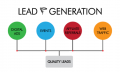
VSynergize, a B2B lead generation company in California offers lead generation, demand generation, call center services and advanced IT/back office solutions.
5/25/2020
In order to sell effectively, you’ll need to constantly generate high-quality leads that you can convert to customers: leads that your salespeople can take, contact, meet and make sales with.
5/25/2020
VSynergize, a B2B lead generation company in California offers lead generation, demand generation, call center services and advanced IT/back office solutions. Being a lead generation company
5/12/2020
VSynergize, a B2B lead generation company in California offers lead generation, demand generation, call center services and advanced IT/back office solutions.
5/25/2020
Lead qualification, thus, does not mean passing on all possible prospects to the sales development teams but sifting through the lead bank ensures higher lead quality.
6/22/2020
Business details
- +1 (888) 810-7464
- 4924 Balboa Blvd., #353 Encino, CA USA 91316
- www.callboxinc.com/
Callbox helps businesses close more leads with AI + human expertise. A leading provider of lead generation services.
California
company, product and service directory
company, product and service directory
Business Network 2008-2026
All rights reserved
All rights reserved