

8/27/2026
Is your Company in our Directory?

Outsourced SDR vs. In-House Sales Teams in Healthcare Tech

10/27/2026
Should you build an in-house SDR team or outsource sales development? The right choice depends on your growth targets, budget, and the technical expertise required to qualify prospects.
In-House vs. Outsourced SDRs
| Factor | In-House SDRs | Outsourced SDRs |
|---|---|---|
| Initial setup | Requires recruitment and training | Faster deployment with an established team |
| Cost structure | Salaries, benefits, tools, and management | Usually a service fee or monthly retainer |
| Product knowledge | Direct access to internal experts | Requires specialized training and alignment |
| Scalability | Depends on hiring capacity | Flexible campaign expansion |
| Management | Direct internal control | Shared oversight and reporting |
| Best for | Complex technical selling | Faster prospecting and market expansion |
An in-house team offers greater control and deeper product knowledge. However, recruitment, training, and operating costs can delay pipeline development.
Outsourced SDRs provide established prospecting resources and greater flexibility. Choosing a healthcare-focused provider is essential to ensure relevant messaging and qualified meetings.
Learn more about outsourced SDR services and explore this outsourced vs. in-house SDR cost comparison.
Why a Hybrid Model Works
Many healthcare technology companies combine both approaches. Outsourced SDRs manage prospect research, outreach, and initial qualification, while internal teams handle technical discussions, product demonstrations, and closing.
This model supports scalable outreach without sacrificing the expertise required for complex healthcare sales.
Effective healthcare IT lead generation also depends on accurate targeting and messaging that addresses buyers' operational, technical, and compliance concerns.
Healthcare Tech Lead Generation Companies to Consider
Companies evaluating outsourced sales development can compare providers based on their target market, outreach capabilities, and ability to support qualified pipeline generation.
| Company | Best For | Core Strength |
|---|---|---|
| Health Launchpad | Enterprise health tech | Account-based marketing |
| Whistle | Medical SaaS companies | Specialized clinical outreach |
| Healthora | Mid-market healthcare | Pipeline generation |
| Callbox | B2B healthcare technology | Multichannel outreach and appointment setting |
| DemandZEN | B2B software companies | Outbound sales development |
These providers reflect the companies listed in the original article. Verify current service offerings, healthcare specialization, and geographic coverage before making a selection.
When evaluating an agency, review its healthcare industry experience, prospect data quality, qualification criteria, reporting process, and handoff procedures.
For additional guidance, read how to generate leads for healthcare technology.
Measuring Pipeline Performance
Evaluate SDR models based on total costs, qualified meetings, conversion rates, and revenue contribution. Outsourcing fees alone do not determine ROI; lead quality and the internal team's ability to convert opportunities matter just as much.
Callbox's enterprise HealthTech case study reported 215 sales-qualified leads, 182 marketing-qualified leads, and a 180% higher qualified meeting rate.
Choosing the Right SDR Strategy
In-house SDRs are suitable when technical expertise and direct control are priorities. Outsourcing can help companies expand outreach and build pipeline faster, while a hybrid model combines external prospecting capabilities with internal sales expertise.
The goal is not simply to book more meetings. It is to connect with the right healthcare decision-makers and create qualified opportunities that support sustainable revenue growth.
Other articles and publications:
Building an in-house SDR team takes time. You need to hire people, train them, invest in sales tools, build prospect lists, and create an outreach process.

An enterprise sales cycle is the multi-month process of selling to large organizations, typically lasting six to nine months or longer.
9/30/2026

Your sales team might be solid, your product might actually solve a real problem—but if the pipeline is thin, growth still stalls.
5/28/2026

Outsourced SDR companies are no longer just support teams, they’re growth partners. By combining technology, data, and human expertise, they help B2B organizations build pipelines and scale faster.
12/15/2025

Even strong internal teams can struggle when it’s time to scale. Lead quality drops, efficiency becomes unclear, and costs rise. That’s why B2B sales outsourcing has become a smart, strategic move.
1/8/2026

Growing a SaaS company quickly teaches you one thing: pipeline problems are rarely about your product. You can have an amazing solution, clear use cases, and competitive pricing.
2/17/2026
Articles and publications of other companies:

Lead qualification, thus, does not mean passing on all possible prospects to the sales development teams but sifting through the lead bank ensures higher lead quality.
6/22/2020
Conquering Complex Sales implements a validated method for building success with high value, competitive business possibilities. To know more or for any assistance reach us on 855-203-8196
6/15/2020
To learn more about Sales and Marketing reach us on 855-203-8196 or email at info@vsynergize. com
6/15/2020
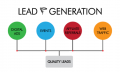
VSynergize, a B2B lead generation company in California offers lead generation, demand generation, call center services and advanced IT/back office solutions.
5/25/2020
In order to sell effectively, you’ll need to constantly generate high-quality leads that you can convert to customers: leads that your salespeople can take, contact, meet and make sales with.
5/13/2020
In order to sell effectively, you’ll need to constantly generate high-quality leads that you can convert to customers: leads that your salespeople can take, contact, meet and make sales with.
5/25/2020
Business details
- +1 (888) 810-7464
- 4924 Balboa Blvd., #353 Encino, CA USA 91316
- www.callboxinc.com/
Callbox helps businesses close more leads with AI + human expertise. A leading provider of lead generation services.
California
company, product and service directory
company, product and service directory
Business Network 2008-2026
All rights reserved
All rights reserved