

9/30/2026
Is your Company in our Directory?

Why Enterprise Sales Cycles Take So Long and How to Shorten Them

10/6/2026
Multiple stakeholders get involved. Security needs to review the technology. Procurement negotiates terms. Legal reviews contracts. Finance checks the business case. Meanwhile, your sales team is trying to keep the champion engaged.
For companies selling into large accounts, an experienced appointment setting company can help create qualified conversations before internal reps invest time in every prospect.
A strong B2B lead generation company can also help identify the right accounts and stakeholders early, while an enterprise lead generation strategy builds those complexities into the sales process from the beginning.
Enterprise Sales Is a Committee Decision
SMB deals can sometimes be decided by one or two people.
Enterprise deals rarely work that way.
IT, security, finance, procurement, legal, operations, and end users may all have a say. Every stakeholder brings a different concern and, in many cases, the ability to delay or stop the deal.
That changes the salesperson's job.
You are not simply convincing one buyer.
You are helping your champion build a case that survives internal scrutiny.
A strong enterprise sales strategy therefore needs multithreading: building relationships with multiple stakeholders instead of depending on one contact.
One Callbox cybersecurity campaign illustrates the value of reaching multiple decision-makers, generating 112 SQLs, 478 MQLs, and 2,370 LinkedIn connections, while adding $3.6M+ in qualified pipeline.
Read the cybersecurity case study.
The 5 Stages of the Enterprise Sales Cycle
1. Prospecting and Account Research
Enterprise prospecting starts with accounts, not contact lists.
Before outreach begins, sales teams should understand the company's structure, technology stack, leadership changes, business priorities, and buying triggers.
For teams that do not have the internal resources to handle this process, lead generation companies for enterprise sales can support account research, targeting, and outreach.
2. Discovery and Qualification
Enterprise discovery should go beyond budget and timeline.
You need to understand:
Who is involved?
How does the company make purchasing decisions?
What could stop the deal?
What business problem justifies the investment?
The goal is to identify a genuine sales-qualified opportunity, not simply a prospect showing interest.
3. Evaluation and Proof of Concept
This is where many deals stall.
Technical reviews and proof-of-concept programs expose gaps in stakeholder engagement. Someone from security may raise a concern. Finance may challenge the ROI. Operations may question implementation.
That is why multithreading matters.
The more stakeholders you understand early, the fewer surprises appear later.
The right lead generation tools can also help sales teams enrich account data, identify buying signals, and prioritize high-fit prospects.
4. Security, Legal, and Procurement
This is often the least exciting part of the sales process and one of the biggest sources of delay.
Security questionnaires, compliance documentation, data processing agreements, vendor assessments, and contract reviews can add weeks to an otherwise healthy opportunity.
Preparation matters.
The teams that have documentation ready before procurement asks for it have a significant advantage.
5. Negotiation and Contract Signing
A deal that reaches negotiation is not necessarily a closed deal.
Payment terms, contract length, data requirements, approvals, and fiscal calendars can still delay the signature.
A deal that looks certain in October may not actually close until January.
Why Enterprise Deals Stall
Most stalled enterprise deals are not caused by a competitor.
They stall because something changes inside the buyer's organization.
A champion goes quiet.
A budget is frozen.
A reorganization changes ownership.
A new executive enters the decision.
These are common enterprise lead generation challenges because complex deals depend on more than product interest.
The best defense is stakeholder mapping from the start.
Ask your champion one question early:
“If this deal stalls, who is most likely to stop it?”
You may learn more from that question than from another product demo.
How to Shorten the Enterprise Sales Cycle
You cannot force an enterprise buyer to make a decision faster.
You can, however, remove unnecessary friction.
That means:
Engage the right accounts earlier.
Focus on companies with a real business trigger instead of broad lead volume.
Build multiple relationships.
Do not let your entire opportunity depend on one champion.
Prepare for objections.
Have ROI evidence, security documentation, customer proof, and implementation details ready.
Qualify harder.
A bad-fit enterprise opportunity can consume months of sales capacity.
Track the bottleneck.
Measure how long deals spend in discovery, evaluation, procurement, and negotiation instead of looking only at total cycle length.
How to Measure Enterprise Sales Cycle Length
Sales cycle length is typically measured as the average number of days from first contact to closed-won.
But one company-wide average can hide the real problem.
Track it by segment:
SMB → Mid-market → Enterprise
Then break the enterprise cycle into stages.
If most deals move quickly through discovery but spend eight weeks in procurement, your problem is not prospecting.
It is procurement readiness.
That distinction matters because shortening a sales cycle is not about making every stage faster.
It is about finding where deals actually slow down and removing the friction causing the delay.
The Enterprise Sales Advantage
Enterprise selling rewards preparation more than pressure.
The teams that consistently move deals forward are not necessarily the ones making the most calls. They are the ones that understand the account, map the buying committee, anticipate objections, and make it easier for every stakeholder to say yes.
That is also where specialized enterprise lead generation can create an advantage.
Because in enterprise sales, the fastest path to a signed contract often begins long before the contract reaches legal.
Other articles and publications:
An enterprise sales cycle is the multi-month process of selling to large organizations, typically lasting six to nine months or longer.

If you have ever watched a promising deal sit in “contract review” for eleven weeks while your CFO asks why the pipeline is not converting, you already understand the enterprise sales cycle.
10/7/2026

RPA vendors need more than generic appointment setting. The right partner should understand technical products, enterprise buying committees, and the longer sales cycles common in automation.
9/29/2026

B2B buying committee is the group of stakeholders inside a company who jointly research, evaluate, and approve a business purchase.
10/14/2026

Becoming increasingly important as freight forwarders, 3PLs, warehousing providers, and logistics SaaS companies compete for complex B2B accounts with longer sales cycles and multiple decision-makers.
10/8/2026

Here’s a closer look at the key shifts in lead generation goals and how to adjust your strategies to achieve them:
10/8/2024
Articles and publications of other companies:

In order to sell effectively, you’ll need to constantly generate high-quality leads that you can convert to customers: leads that your salespeople can take, contact, meet and make sales with.
5/13/2020
To learn more about Sales and Marketing reach us on 855-203-8196 or email at info@vsynergize. com
6/15/2020
In order to sell effectively, you’ll need to constantly generate high-quality leads that you can convert to customers: leads that your salespeople can take, contact, meet and make sales with.
5/25/2020
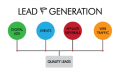
VSynergize, a B2B lead generation company in California offers lead generation, demand generation, call center services and advanced IT/back office solutions.
5/25/2020
VSynergize, a B2B lead generation company in California offers lead generation, demand generation, call center services and advanced IT/back office solutions
5/30/2020

Every business needs influencer marketing, once in a while, gets a chance to be unwillingly promoted by a local fan, famous person, or celebrity. And that doesn’t have to be done intentionally.
6/9/2020
Business details
- +1 (888) 810-7464
- 4924 Balboa Blvd., #353 Encino, CA USA 91316
- www.callboxinc.com/
Callbox helps businesses close more leads with AI + human expertise. A leading provider of lead generation services.
California
company, product and service directory
company, product and service directory
Business Network 2008-2026
All rights reserved
All rights reserved