

9/23/2026
Is your Company in our Directory?

Sales Outreach Strategy: A 5-Phase Guide for B2B Teams in 2026
8/24/2026
Quick Answer: A sales outreach strategy gives B2B teams a structured way to identify high-value accounts, reach the right decision-makers, build meaningful engagement, and convert prospects into qualified sales opportunities. For enterprise teams, enterprise lead generation and appointment setting can turn targeted outreach into sales conversations.
The 5 Phases of a Sales Outreach Strategy
-
Targeting and data: Identify accounts and contacts that fit your ICP and show buying potential.
-
Infrastructure: Establish email deliverability and sending systems before scaling.
-
Relevance: Build messages around buyer needs and business conditions rather than superficial personalization.
-
Orchestration: Coordinate email, phone, and LinkedIn into one consistent sequence.
-
Measurement: Track metrics that demonstrate pipeline and revenue impact.
A strong strategy should answer six questions:
-
Who should we contact?
-
Why are they worth contacting now?
-
Is our data accurate?
-
Will our messages reach the inbox?
-
What makes this prospect care?
-
How will we measure and improve results?
Why a Documented Sales Outreach Strategy Matters
A documented strategy makes outbound prospecting more predictable.
1. Creates a More Predictable Pipeline
When your target market, cadence, conversion rates, and qualification criteria are defined, your team can forecast opportunities based on measurable inputs rather than guesswork.
Use structured sales cadence examples to determine how often prospects should receive calls, emails, and social touches.
2. Reaches More Buying Committee Members
Complex B2B purchases rarely involve a single decision-maker. Your strategy should account for executives, technical evaluators, end users, procurement, and other stakeholders.
Each role has different priorities. Executives may care about ROI and risk, while technical teams may focus on integration, security, and implementation.
3. Gives You Greater Control Over Your Target Market
Inbound marketing attracts people who discover your company. Outbound allows you to proactively select the accounts, industries, locations, and buyer profiles that best match your commercial objectives.
That makes sales prospecting especially valuable when your goal is to reach specific high-value accounts.
Phase 1: Targeting and Data
The quality of your outreach depends heavily on the quality of your target list.
Instead of treating your entire total addressable market as one audience, narrow your ICP around companies that fit your solution and have a reason to consider it now.
Look at:
-
Industry and company size
-
Revenue and growth stage
-
Geography
-
Technology stack
-
Recent leadership changes
-
Expansion or funding
-
Regulatory requirements
-
New technology investments
-
Contract renewal periods
-
Known business challenges
-
Disqualifying criteria
The key distinction is fit versus timing. A company can be an excellent customer profile but still be unlikely to respond if there is no current business need.
Map the Buying Committee
Before launching outreach, identify who influences the purchase.
| Role | Primary Concern | Outreach Focus |
|---|---|---|
| Economic buyer | Cost and ROI | Business impact |
| Technical evaluator | Integration and security | Technical proof |
| End user | Workflow and efficiency | Practical benefits |
| Procurement | Vendor risk and terms | Clear documentation |
| Executive sponsor | Strategic outcomes | Revenue and growth |
Avoid sending exactly the same message to everyone. A CFO and IT director may be involved in the same purchase but have very different reasons for responding.
Make Data Quality a Priority
Outdated contact information leads to bounced emails, missed calls, and wasted sales effort.
Verify contact information across reliable sources and prioritize direct contact details whenever possible.
As a practical benchmark, keep your bounce rate below 2%. If your bounce rate is consistently higher, improve your data before increasing sending volume.
Smaller, highly targeted lists can outperform large generic databases because relevance matters more than raw contact volume.
Phase 2: Infrastructure and Deliverability
A great email has no value if it never reaches the prospect.
Before scaling outbound email, establish the technical infrastructure required to protect sender reputation.
Configure Email Authentication
Your sending domains should have:
-
SPF to identify authorized sending servers
-
DKIM to authenticate outgoing messages
-
DMARC to establish policies for messages that fail authentication
Consider separating high-volume outbound activity from your primary corporate email infrastructure. This can help reduce the risk of a prospecting campaign affecting important business communications.
Warm Up New Mailboxes
New domains and mailboxes should gradually increase sending volume rather than immediately sending hundreds of messages.
The objective is to establish a credible sending reputation before scaling.
Also remember that open rate is an imperfect metric because privacy features can inflate recorded opens. Use replies, positive responses, meetings, and pipeline as more meaningful indicators.
Protect LinkedIn Accounts
LinkedIn can complement email and phone outreach, but excessive connection activity or automation can trigger restrictions.
Use LinkedIn to build recognition, engage with relevant content, and establish credibility—not simply as another channel for mass messaging.
Phase 3: Relevance, Not Superficial Personalization
Personalization does not automatically make an outreach message relevant.
Adding someone's first name, company name, or recent LinkedIn post is not enough if the message doesn't address a problem they care about.
Effective outreach connects the message to a specific business condition.
A strong first message can follow four steps:
-
Trigger: What changed or happened?
-
Consequence: Why does that change matter?
-
Proof: What comparable result or evidence can you provide?
-
Ask: What is the easiest next step?
For example, instead of saying:
“I noticed your company is growing and thought our services could help.”
Connect the message to an actual business situation:
“Saw you're expanding your enterprise sales team into North America. Teams making that move often struggle to build enough qualified pipeline before new reps reach full productivity.”
The second message gives the prospect a reason to pay attention.
Make the First Ask Easy
Your first email doesn't always need to request a 30-minute meeting.
For colder prospects, ask a low-friction question:
-
“Is this a priority this quarter?”
-
“Would it be useful if I sent the benchmark?”
-
“Are you currently evaluating this?”
-
“Worth comparing approaches?”
As familiarity increases, you can move toward a direct meeting request.
Phase 4: Orchestrate Email, Phone, and LinkedIn
A multi-channel strategy gives prospects multiple opportunities to engage.
The important distinction is between using multiple channels and coordinating them.
For example, a sales rep can send an email, reference that email during a call, engage with the prospect on LinkedIn, and adjust follow-up timing based on the prospect's behavior.
A Practical 21-Day Outreach Cadence
| Day | Channel | Purpose |
|---|---|---|
| 1 | Introduce the problem and relevant trigger | |
| 2 | Build recognition | |
| 3 | Phone | Reference the email |
| 4 | Send connection request | |
| 7 | Provide new insight or proof | |
| 9 | Phone | Discuss the issue |
| 12 | Share useful information | |
| 15 | Present a specific value proposition | |
| 18 | Phone | Qualify fit and timing |
| 21 | Close the loop |
This cadence should be adjusted according to industry, seniority, buying cycle, and prospect behavior.
The most important rule is simple: don't let the calendar override buying signals.
If a prospect clicks an asset, responds to an email, engages with your LinkedIn content, or shows another meaningful signal, follow up while the subject is still relevant.
Don't Stop After One Follow-Up
A single unanswered email does not necessarily mean a prospect isn't interested.
Some buyers are busy, evaluating priorities, or simply haven't seen the message.
However, every follow-up should add something new—a useful insight, benchmark, case study, or relevant observation.
Avoid “just checking in.”
For prospects that fit your ICP but aren't ready, create a long-term nurture process and revisit them every three to six months, depending on your sales cycle.
Phase 5: Measure What Actually Drives Revenue
Outreach teams often measure activity instead of outcomes.
Emails sent and calls completed show effort. They don't necessarily show whether the strategy is working.
Track metrics such as:
| Metric | What It Shows |
|---|---|
| Bounce rate | Data and deliverability quality |
| Reply rate | Initial engagement |
| Positive reply rate | Message and audience quality |
| Meeting booked rate | Ability to generate conversations |
| Meeting show rate | Prospect quality and qualification |
| Qualified opportunities | Pipeline contribution |
| Win rate | Sales effectiveness |
| Average deal size | Revenue quality |
| Sales cycle | Speed to revenue |
Focus on Pipeline Velocity
One useful formula is:
Pipeline Velocity = (Qualified Opportunities × Win Rate × Average Deal Size) ÷ Sales Cycle Length
This helps revenue teams understand how quickly their outbound engine turns qualified opportunities into potential revenue.
Don't judge an enterprise outreach campaign solely by short-term closed revenue. Complex B2B purchases can take months, particularly when multiple stakeholders are involved.
Instead, establish expectations for leading indicators before the campaign begins.
Ready to learn more about sales outsourcing and howw it can help your B2B business? Visit Callbox now!
Other articles and publications:
Your product may solve a real problem, but without a steady flow of qualified prospects, even experienced sales reps can struggle to hit their targets.

The healthcare industry is evolving rapidly, with technology driving efficiency and innovation. From EHRs to telemedicine, software solutions are transforming the way healthcare providers operate.
12/17/2025

Most B2B teams already have tools, scripts, and processes in place. The real issue isn’t strategy—it’s execution consistency. Coverage gaps appear and outbound becomes harder to sustain internally.
2/3/2026

In 2025, high-performing B2B teams rely on data-driven, personalized outbound strategies to connect with the right buyers at the right time.
1/19/2026

A customer acquisition agency helps B2B companies attract, engage, and convert customers through coordinated marketing and sales execution. The focus is on conversion quality, not volume.
1/29/2026

As competition intensifies across B2B markets, many organizations are rethinking how they generate sales pipeline.
3/19/2026
Articles and publications of other companies:
VSynergize, a B2B lead generation company in California offers lead generation, demand generation, call center services and advanced IT/back office solutions.
5/25/2020
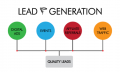
VSynergize, a B2B lead generation company in California offers lead generation, demand generation, call center services and advanced IT/back office solutions.
5/25/2020
In order to sell effectively, you’ll need to constantly generate high-quality leads that you can convert to customers: leads that your salespeople can take, contact, meet and make sales with.
5/25/2020

VSynergize, a B2B lead generation company in California offers lead generation, demand generation, call center services and advanced IT/back office solutions. Being a lead generation company
5/12/2020
For a free consultation for your B2B lead generation needs, Call us at 1-888.257.9162 or Email us at info@vsynergize. com
6/15/2020
VSynergize, a B2B lead generation company in California offers lead generation, demand generation, call center services and advanced IT/back office solutions.
5/30/2020
Business details
- +1 (888) 810-7464
- 4924 Balboa Blvd., #353 Encino, CA USA 91316
- www.callboxinc.com/
Callbox helps businesses close more leads with AI + human expertise. A leading provider of lead generation services.
California
company, product and service directory
company, product and service directory
Business Network 2008-2026
All rights reserved
All rights reserved