

9/23/2026
Is your Company in our Directory?

Leading Cybersecurity Companies to Watch in 2026

1/7/2026
Cyber threats are no longer random or opportunistic. Today’s attacks are targeted, coordinated, and relentless—designed to exploit vulnerabilities faster than most organizations can respond.
For modern businesses, staying secure isn’t just about deploying tools. It’s about partnering with cybersecurity leaders that anticipate risks, neutralize threats early, and help organizations recover quickly when incidents occur.
That’s where the world’s leading cybersecurity companies stand apart.
These firms go beyond basic network protection. They combine AI-driven intelligence, automation, and deep threat research to secure digital assets across cloud, endpoint, identity, and hybrid environments. Whether you’re a startup handling sensitive customer data or a global enterprise managing thousands of endpoints, choosing the right cybersecurity partner can define your long-term resilience.
How We Identified the Leading Cybersecurity Companies
This list is based on a blend of performance, innovation, and market trust. Each company was evaluated using the following criteria:
-
Technology Leadership – Effective use of AI, automation, and analytics to prevent, detect, and respond to threats
-
Market Presence – Strong reputation with adoption across enterprise and mid-market organizations
-
Breadth of Solutions – Coverage across endpoints, networks, cloud, and identity security
-
Compliance Readiness – Alignment with standards such as ISO 27001, GDPR, and CCPA
-
Customer Confidence – Proven results through case studies, retention, and long-term deployments
-
Innovation & Research – Continuous investment in threat intelligence and R&D
-
Scalability & Support – Ability to serve organizations globally with consistent performance
These factors ensure each company represents reliability, foresight, and measurable impact in the cybersecurity space.
Top Cybersecurity Companies to Watch in 2026
1. Palo Alto Networks
Palo Alto Networks remains one of the most trusted names in cybersecurity. Its AI-powered platforms secure networks, endpoints, and cloud environments through real-time analytics and automation. Solutions like Cortex XSOAR and Prisma Cloud are widely used for advanced threat detection and response.
Key Strength: Unified security across hybrid and multi-cloud environments
Website: Palo Alto Networks
2. CrowdStrike
CrowdStrike is best known for redefining endpoint protection. Its Falcon platform leverages behavioral analytics and threat intelligence to stop breaches before they spread, while offering deep visibility into attack patterns.
Key Strength: Cloud-native endpoint and identity protection
Website: CrowdStrike
3. Fortinet
Fortinet delivers end-to-end security through its FortiGate firewalls and Security Fabric platform. Its high-performance network security and secure SD-WAN solutions are especially valuable for distributed and remote teams.
Key Strength: Integrated network security and performance
Website: Fortinet
4. Cisco Systems
Cisco has extended its networking leadership into cybersecurity with SecureX, an integrated platform that connects endpoint, email, cloud, and network security with automation and centralized visibility.
Key Strength: Enterprise-grade security for hybrid IT environments
Website: Cisco Systems
5. Check Point Software Technologies
Check Point is known for its prevention-first philosophy. Its Infinity Architecture and Quantum Security Gateways offer scalable protection with minimal latency across complex network environments.
Key Strength: Advanced threat prevention at scale
Website: Check Point Software Technologies
6. IBM Security
IBM Security combines technology with consulting expertise. With tools like QRadar SIEM and X-Force Threat Intelligence, IBM helps enterprises manage threats while building long-term cyber resilience strategies.
Key Strength: Integrated threat management and advisory services
Website: IBM Security
7. Microsoft Security
Microsoft Security protects billions of users and endpoints through solutions like Defender, Sentinel, and Entra ID. Its vast telemetry and AI-driven insights make it one of the most data-informed security ecosystems available.
Key Strength: AI-enhanced security across Microsoft and third-party environments
Website: Microsoft Security
8. Trellix
Born from the merger of McAfee Enterprise and FireEye, Trellix focuses on Extended Detection and Response (XDR). Its platform provides unified visibility across environments, enabling faster detection and response.
Key Strength: Cross-environment threat detection and incident response
Website: Trellix
9. Sophos
Sophos is widely trusted by small and midsize businesses. Its Intercept X solution uses deep learning to stop ransomware and zero-day threats before damage occurs.
Key Strength: Strong endpoint and ransomware protection for SMBs
Website: Sophos
10. SentinelOne
SentinelOne’s Singularity Platform uses autonomous AI to identify, contain, and remediate threats in real time—without constant manual intervention.
Key Strength: Autonomous endpoint threat prevention and response
Website: SentinelOne
How to Choose the Right Cybersecurity Partner
Selecting the right provider depends on your organization’s size, industry, and risk exposure. A practical approach includes:
-
Assessing your risk profile and critical assets
-
Ensuring integration compatibility with your existing IT stack
-
Considering managed security services to reduce internal workload
-
Prioritizing automation and AI for faster threat detection
-
Reviewing compliance and privacy support
-
Verifying 24/7 response and support capabilities
For cybersecurity vendors, the challenge goes beyond protection. Reaching IT decision-makers, building credibility, and nurturing trust through cybersecurity lead generation is essential for sustainable growth.
Other articles and publications:
Your product may solve a real problem, but without a steady flow of qualified prospects, even experienced sales reps can struggle to hit their targets.

If you have ever watched a promising deal sit in “contract review” for eleven weeks while your CFO asks why the pipeline is not converting, you already understand the enterprise sales cycle.
10/7/2026

Here are the Top Lead Generation Companies for SaaS in 2026, plus insights on how to choose the right one for your growth stage.
10/29/2025

Winning in the UK B2B market requires relevance, perfect timing, personalised messaging, and multi-channel consistency.
11/24/2025

The United Kingdom has become one of Europe’s most competitive SaaS hubs, with strong clusters in London, Manchester, Cambridge, Edinburgh, and Leeds.
11/20/2025

If you’re running a B2B business in 2025, lead generation isn’t optional, it’s the engine that feeds your entire sales pipeline.
11/25/2025
Articles and publications of other companies:
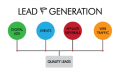
VSynergize, a B2B lead generation company in California offers lead generation, demand generation, call center services and advanced IT/back office solutions.
5/25/2020
VSynergize, a B2B lead generation company in California offers lead generation, demand generation, call center services and advanced IT/back office solutions. Being a lead generation company
5/12/2020
VSynergize, a B2B lead generation company in California offers lead generation, demand generation, call center services and advanced IT/back office solutions.
5/25/2020
VSynergize, a B2B lead generation company in California offers lead generation, demand generation, call center services and advanced IT/back office solutions.
5/30/2020
In order to sell effectively, you’ll need to constantly generate high-quality leads that you can convert to customers: leads that your salespeople can take, contact, meet and make sales with.
5/25/2020

VSynergize, a B2B lead generation company in California offers lead generation, demand generation, call center services and advanced IT/back office solutions
5/30/2020
Business details
- +1 (888) 810-7464
- 4924 Balboa Blvd., #353 Encino, CA USA 91316
- www.callboxinc.com/
Callbox helps businesses close more leads with AI + human expertise. A leading provider of lead generation services.
California
company, product and service directory
company, product and service directory
Business Network 2008-2026
All rights reserved
All rights reserved